The History of SEASIDE®
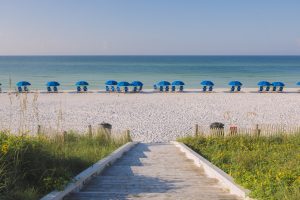
Seaside began in 1981 on eighty acres that Robert Davis inherited from his grandfather. The goal was not a resort concept, but an idea to build a place where families can go to spend their time together. Robert and his wife, Daryl, wanted a place where families could leave their workday lives behind, slow down, and simply enjoy being together, the way Robert remembered doing as a child on this same stretch of coast.
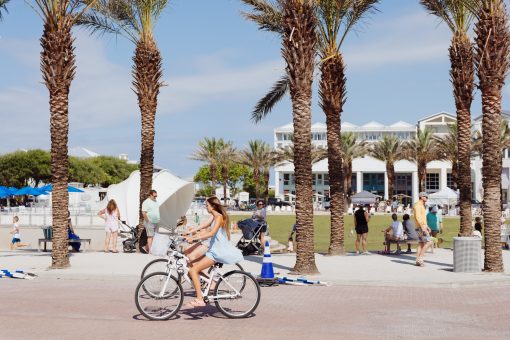
Architects Andres Duany and Elizabeth Plater-Zyberk designed a town, not a property. It was built around brick streets, front porches, and a town square within a five-minute walk of every home.
This idea became the world’s first New Urbanist town, but the architecture was never really the point. The point was what the design made possible: neighbors who actually run into each other, kids who can walk to the beach on their own, and a rhythm of daily life that feels like a small town because it is one. Seaside isn’t styled to just look like a community. It is designed to be one. Forty years, and its legacy.
A Town Square, Not a Resort Lobby
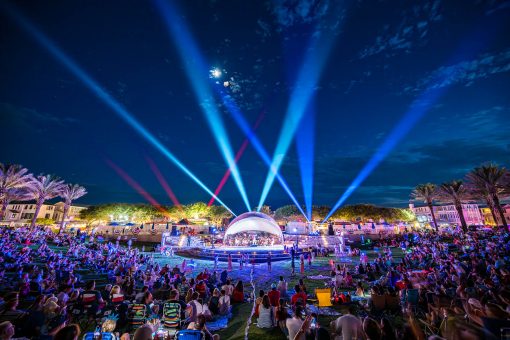
Spend a week in Seaside, and you’ll notice the town is in its own world. The Seaside Farmers Market fills the amphitheater every Saturday morning, offering fresh produce, baked goods, and specialty foods. Some nights, families spread blankets across the amphitheater lawn for a movie under the stars; other nights, it’s live local music or a dance with Huck and Lilly.
Seaside is a place people actually live, work, and raise their kids. The Seaside Neighborhood School sits right in town, and its annual half marathon and 5K has raised more than half a million dollars for local education over the years. When you join in on market day or grab a seat for movie night, you’re not attending a staged resort activity. You’re stepping into the same town square where this community has always gathered.
The Tradition Families Keep
Seaside was not built to be a one-time destination; it was built to be returned to. Robert and Daryl’s own son, Micah, grew up in this town and chose to come back as an adult to help run it; that same instinct is what brings so many families back year after year, until a Seaside trip stops feeling like a vacation and starts feeling like a family tradition.
Coming back doesn’t get repetitive; it gets richer, one more layer of memory laid over the last. That’s the difference between visiting a place and belonging to one. At Seaside, families choose belonging.
Frequently Asked Questions
What is the history of Seaside, Florida?
The land dates back to 1946, when J.S. Smolian first used the 80-acre plot near Seagrove Beach as a summer camp. It sat largely untouched until 1978, when his grandson, Robert Davis, saw its potential and began developing it with his wife, Daryl. Construction started in 1981 with just two houses and a single street, and by 1982 architects Andres Duany and Elizabeth Plater-Zyberk had drawn up the master plan and urban code that would make Seaside the first New Urbanist town in the country. A 1984 feature in Southern Living put the young community on the map, and it’s grown since into a town of 300-plus homes, shops, and restaurants, all built around the same walkable design and family-first philosophy the Davises started with more than forty years ago.
What is Seaside, Florida known for?
Seaside is best known as the birthplace of New Urbanism, the walkable, front-porch town design that inspired countless coastal communities that came after it. It’s also famous as the filming location for the 1998 movie The Truman Show, you can still walk past the Truman House on Natchez Street and the family-owned Modica Market that appeared in the film. Beyond the architecture and the movie trivia, Seaside is known for its pastel cottages and brick streets, its Central Square amphitheater, the weekly farmers market, and for being the kind of place families return to year after year rather than visit just once.
Is Seaside an actual town, or is it a resort property?
Seaside is a real town, one of the first planned communities in the country built around walkability and neighborhood life, founded in 1981. People live here year-round, send their kids to the local school, and shop at the same stores visitors do. Staying in Seaside means stepping into that community, not a resort campus built apart from one.
Who founded Seaside, and why?
Robert and Daryl Davis founded Seaside on land Robert inherited from his grandfather, with the goal of building a place where families could slow down and spend real time together. They worked with architects Andres Duany and Elizabeth Plater-Zyberk to design the town around brick streets, front porches, and a central square.
What community events can we take part in during our stay?
Quite a bit. The Seaside Farmers Market runs Saturday mornings in the amphitheater, Huck and Lilly take the amphitheater stage on Tuesdays and Thursdays, and there are regular outdoor movie nights and live music evenings at the amphitheater throughout the week. These aren’t put on for visitors specifically; they’re the town’s actual weekly rhythm, and guests are welcome to join in.
Do families really come back year after year?
Yes, it’s one of the things Seaside is best known for. Many families have been returning for decades, and it’s common to meet multiple generations of the same family who consider Seaside their tradition rather than a one-time trip.
Is there anything for kids that’s tied to the local community, not just tourism?
Yes. The Seaside Neighborhood School is part of daily life in town, and its annual half marathon and 5K are a genuine community fundraiser that’s raised significant money for local education. Children’s Theater and family movie nights at the amphitheater are also woven into the town’s regular calendar, not staged as one-off resort activities.
Is Seaside walkable, and do we need a car to experience the community?
No car needed. Seaside was designed so the town square, beach, shops, and restaurants are all within an easy walk of most stays, which is part of what makes the community feel the way it does. Slow streets and short walks mean you actually see and run into your neighbors, the same way residents do.
What makes Seaside different from other beach towns on 30A?
Seaside was the first of its kind, the original template for the walkable, New Urbanist town design later echoed by other communities along the coast. More than the architecture, though, it’s the fact that Seaside has been a functioning, lived-in community for over four decades, with its own school, its own traditions, and generations of the same families returning to it.