Seaside Milestone Anniversary: The Birthplace of New Urbanism Celebrates 45 Years
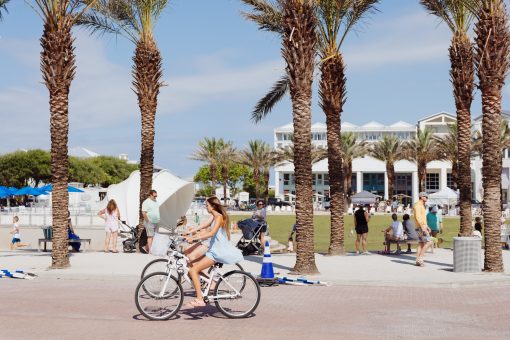
Thoughtfully planned to encourage spending time together, Seaside is a town that feels good to be in, where neighbors gather and talk, kids ride bikes and play, and families enjoy a leisurely walk about town. When Robert and Daryl Rose Davis founded Seaside in 1981, they envisioned a small patch of beautifully detailed, densely grouped cottages surrounded by natural landscape, with easy access to the emerald Gulf waters.
“The idea of Seaside,” as Robert Davis recalls, “came from my memories of childhood summers near here, staying in simple cottages some distance from the beach, walking each morning to a corner store or cafe for breakfast or lunch, spending evenings on the porch waiting for the house to cool and listening to family members tell stories.”
The Birth of New Urbanism
When Davis inherited the land, he and Daryl, along with husband and wife architectural team Andrés Duany and Elizabeth Plater-Zyberk, not wanting to create yet another sprawling beach community, toured coastal communities of Grayton Beach and Key West, Fla.; Charleston, S.C., and Savannah, Ga., to find out what made those places structurally and socially appealing. By combining the best features of each city, the plan for Seaside was born.
The team planned the town on a neighborhood scale that is designed to foster a sense of community. The streets are all interconnected, creating a network that eliminates collector routes and reduces congestion. Walkways crisscross the development to encourage walking and biking, while narrow streets serve to reduce traffic speed. To further this sense of place along the streets, building fronts are a uniform distance from the curb and all streets are tree-lined.
Seaside is the first, and to date most successful, example of New Urbanism, or traditional neighborhood development. “And it has grown more slowly than most,” Davis says. “This gives it a more natural and organic character; it has a patina, of aging older houses, peeling paint on some of them and landscaping that has morphed from knee-high scrub to mature canopy trees.”
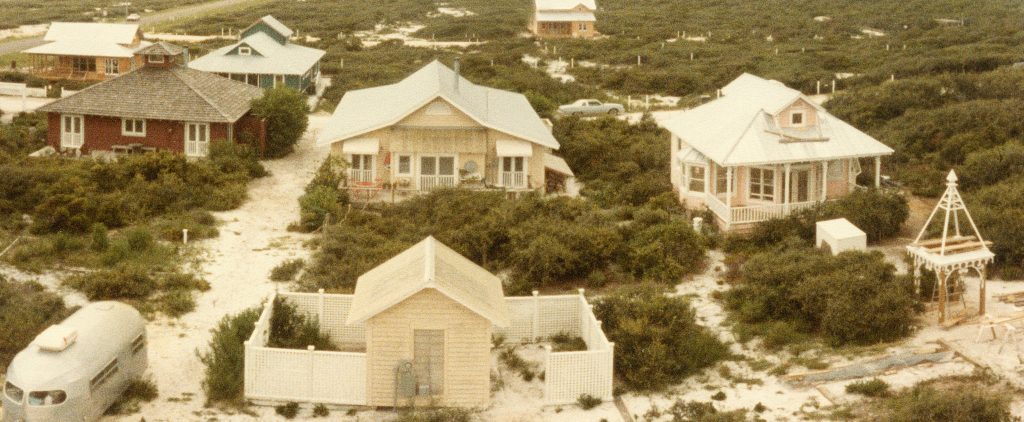
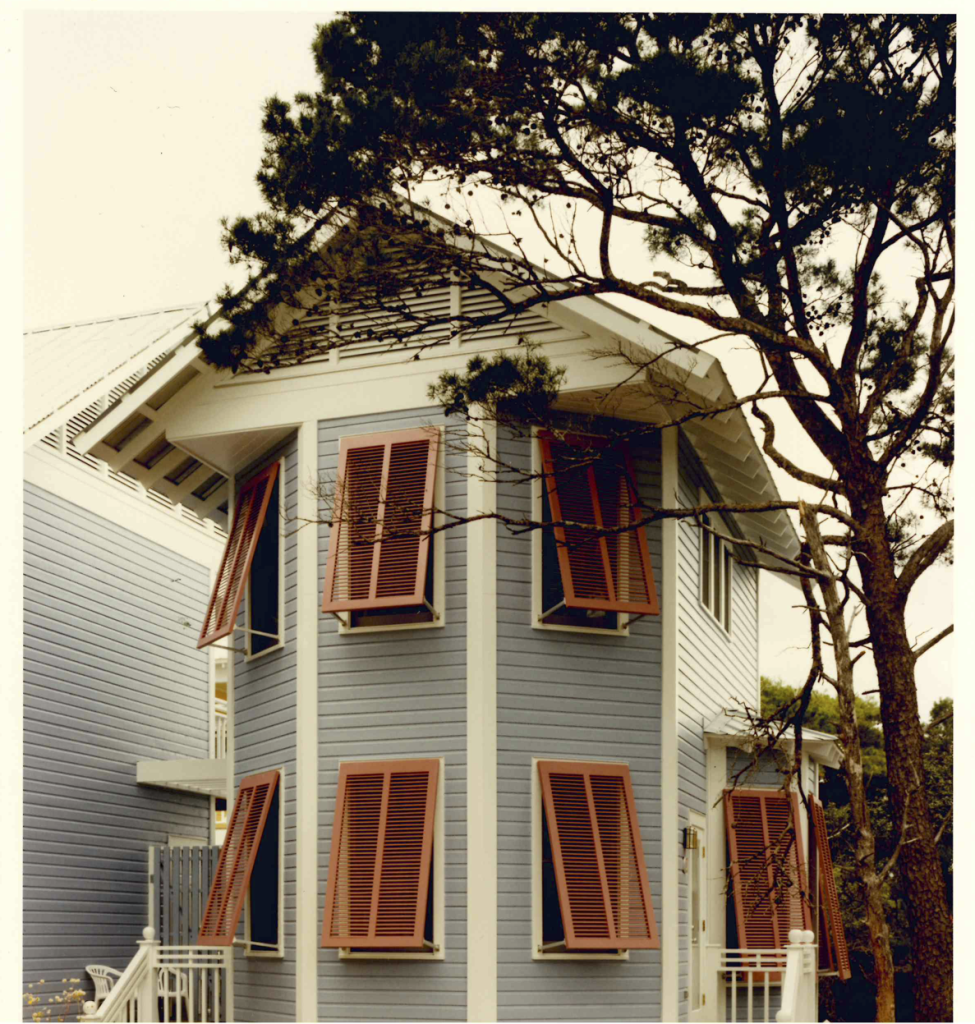
Zoning provides for a mix of residential structures. While each home has its own distinctive character, the tin-roofed cottages are architecturally uniform, and most are elevated to take advantage of cross ventilation. Seaside has approximately 350 cottages, ranging in size from small and cozy to large and rambling, easily allowing several generations to gather together. The town also has about 150 outbuildings, small houses behind the main buildings. The population is small in the winter, with close to 100 residents, and large in spring and summer, with several thousand people.
Seaside has been named No. 1 “Best Family Beach Vacation Destination in the Nation” for 2026 by U.S. News & World Report. Seaside’s many other accolades include being featured on the Cooking Channel’s “Emeril’s Florida,” being named the “Best Beach on Earth” for families by Travel + Leisure magazine, and being included in USA Today’s “Top 10 Best Beach Towns in Florida.” Seaside also served as the primary filming location for the classic movie “The Truman Show.”
Sustainability
Seaside’s approach to sustainability has been described as “the original green,” according to Davis. “It incorporates old-fashioned techniques that were common a century ago. Its houses are made of locally available materials that weather well in an environment with salt in the air and torrential rains alternating with blinding sunshine. They have air spaces below, for drainage and ventilation and are laid out to maximize cross ventilation. Many of them have outdoor showers and kitchens, to keep heat out of the main house.”
Before xeriscaping was a word, Seaside’s codes prohibited lawns, except for public spaces, and required plantings to be native trees and plants, to minimize irrigation, fertilizers and pesticides.
“Of course, the most important contribution of Seaside’s planning to sustainability is its walkability,” Davis adds. “Most people walk for most daily activities. This reduces pollution and energy consumption.”
Elements of a Town
The most important features of the town of Seaside are the ones that promote interaction among its residents. Mandatory porches are set close enough to walkways to enable porch sitters and passersby to communicate without raising their voices. The community has a discernible center, creating a common gathering place. Inspired by Thomas Jefferson’s plan for an academical village for the University of Virginia, the lyceum lawn is lined with a colonnade linking buildings for the Seaside Neighborhood School, the Seaside Institute and a music hall. And shops, restaurants, the beach, the Seaside Post Office and The Chapel at Seaside are located within a five-minute walk of each dwelling, with various routes to take.
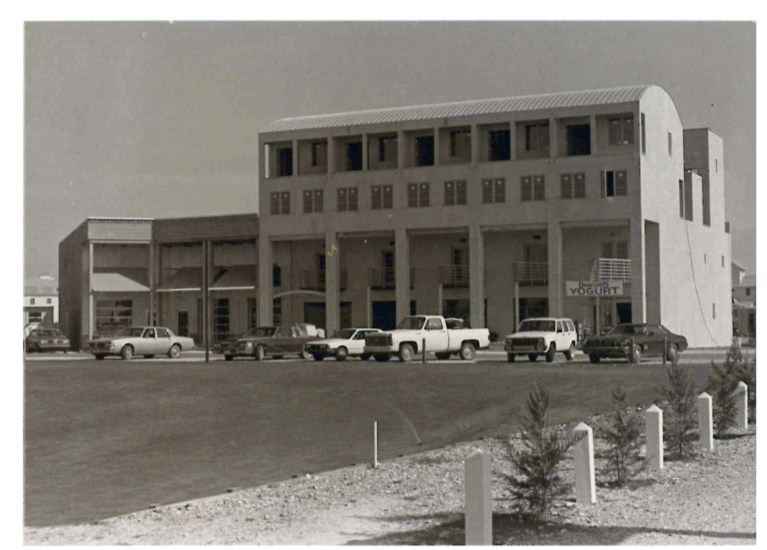
Charles Modica Sr. and his wife, Sarah opened Modica Market in 1989. Before he passed away in 2010, Charles Sr., who was considered one of the town’s founding fathers, was a recognizable face among community members, known for his bushy white beard and kind, inviting smile. The gourmet grocery store has since flourished into one of the most recognizable businesses along scenic Highway 30A. The store functions not only for Seaside but for the community as well.
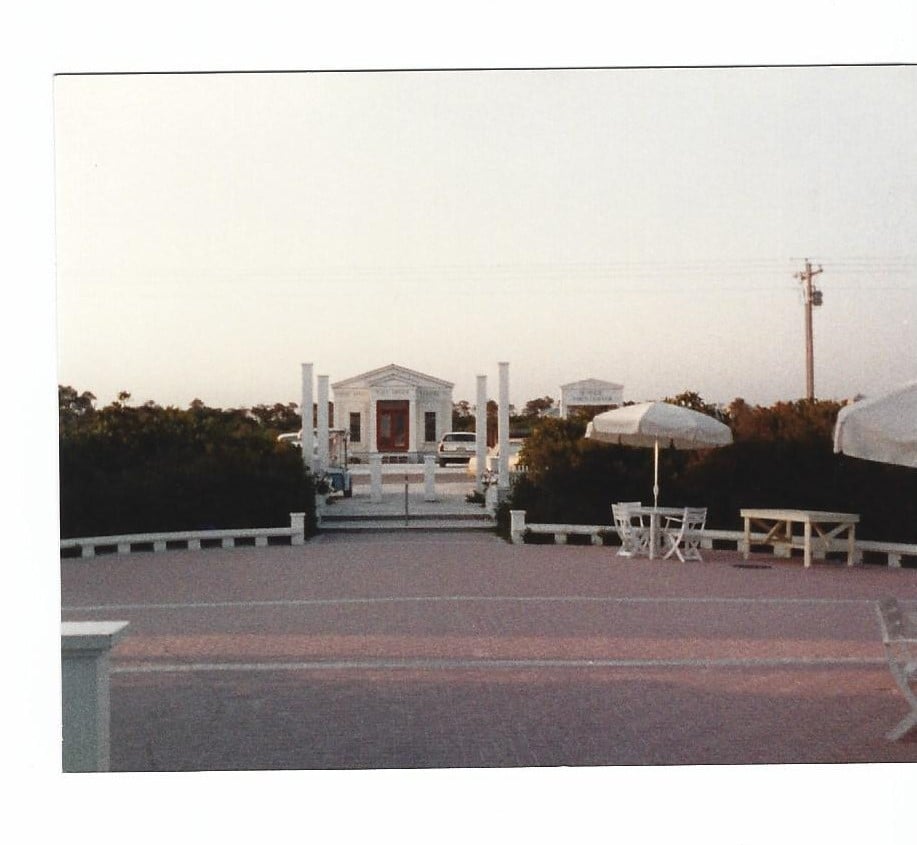
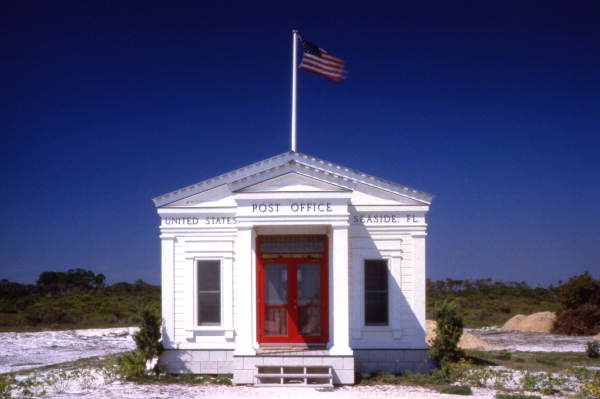
The Seaside Post Office, designed by Davis and originally located in the town center, was the second civic building to be built in Seaside, after Ernesto Buch’s Tupelo Street Beach Pavilion, according to “Visions of Seaside” by Dhiru A. Thadani. “Having a physical post office at Seaside established a sense of place and gave the town credibility and the perception of being real,” Thadani writes. “Subliminally this convinced potential home buyers that a town would emerge over time.”
Opened in 1985, the post office instantly became a landmark for the town. In 2018, the building suffered minor damage as a result of a four-foot drop while being lifted from its original foundation as it was to be transported from its Highway 30A location to its current spot next to Sundog Books. Fully repaired, the Seaside Post Office has become the most photographed building in Seaside, and arguably one of the most photographed in the country.
On Feb. 25, 2026, as part of the master plans of Seaside, the post office held a ceremonial raising of the American Flag at the newly installed flagpole. The program included a special performance of The National Anthem, an appearance by the Walton County Sheriff’s Office Honor Guard and a dedication from the Davis Family and the Seaside Community Development Corporation. The flagpole stands as a realized element of the town’s civic landscape.
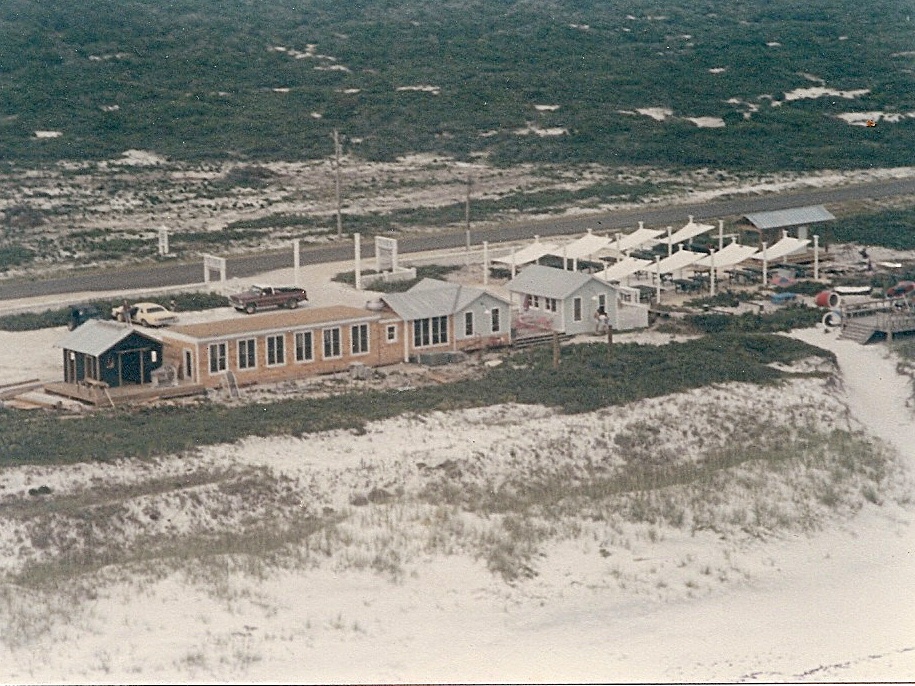
Even now, when e-books are a popular option for book lovers, every town benefits from a neighborhood bookstore. In 1986, Bob and Linda White opened Sundog Books on Memorial Day Weekend to be available for whatever tourists were vacationing nearby. In its first location on the beach side of town, Sundog Books was just a little 8’x12’ plywood shack with a tin roof. The shop only stayed open in the summer months in its early days. Celebrating its 40th year, Sundog is open year-round, and has since moved into Central Square.
In 1983, Seaside co-founder Daryl Davis opened the Seaside Saturday Market, where customers could shop for fresh produce, baked goods and arts and crafts while lingering awhile to visit and enjoy the fresh Gulf breeze.
The open-air market quickly became a popular gathering spot, and within a year Davis, along with her dear friend Mary Patton, experimented in expanding the market to include cotton T-shirts, simple sun dresses, straw hats and bags, colorful pottery and one-of-a-kind items for the cottages. They named the business Perspicasity, a deliberate misspelling (to aid pronunciation), a word meaning keenness of insight. Renowned architect, Deborah Berke, was commissioned to design the market to resemble a primitive forum in a tiny ancient Roman Town. The result was a beachside courtyard enclosed by eight-foot simple wooden structures with stretched canvas to provide shade.
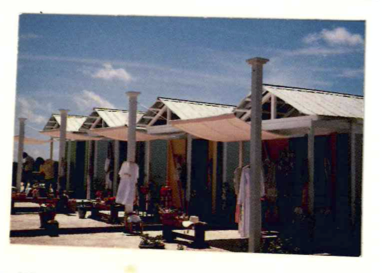
Renamed Cabana by The SEASIDE Style®, the concept remains. Shoppers are still perusing wares in the original beachside cabanas, which now feature clothing and accessories that can transcend the Seaside lifestyle from one year to another. Each 64-square-foot hut is arranged like a vignette so the customer has an idea of how to wear the style.
In 1993, Dr. Rosemary Williams, a homeowner in Seaside, along with a group of concerned individuals, sought to establish the foundation of a new school. At the time, there were no charter schools in Florida, but when Williams and Davis began discussing the possibility of a school in Seaside, they discovered that a group of senators in Tallahassee were working on the Charter School Bill. The Charter Bill was passed in 1996. Beth Folta and Linda Dwyer, who were working with Seaside Community Development, joined the team to lend their expertise in development and financial planning. The Seaside Neighborhood School welcomed its first 36 students, along with two faculty members and one administrator. The school’s first classrooms were located in two modular units, and the enthusiasm and dedication behind the project prompted Robert Davis to donate the land for the first building.
Designed in 1999 by Seaside’s town architect Scott Merrill, The Chapel at Seaside was built on the north end of the central axis of the town plan. The church board requested that the design serve all members of the community, accommodate 200 people, have an element that could be seen from a distance and be made of materials characteristic of the region.
The chapel’s primary mission is to offer locals a church home that provides ongoing spiritual growth, while also creating a place that transient guests can experience an uplifting service in which to celebrate their faith.
Ruskin Place, a mixed-use neighborhood and park in Seaside, did not exist in the early master plan drawings for Seaside — only an axial thoroughfare connected the chapel site to the town center. The formal parallel rows of trees in the southern portion of the space help reinforce the definition as well as create an intimate and comfortable feeling.
Ruskin Place has always been somewhat of a hidden treasure, surprising visitors who come upon the small outdoor rooms to the north of Central Square. The tranquil park, surrounded by boutiques and art galleries, rewards those who want to take an afternoon spent relaxing under the twisted oaks.
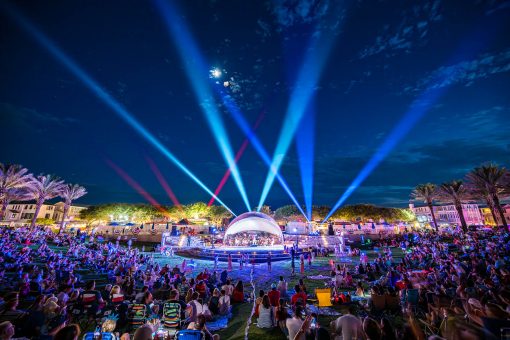
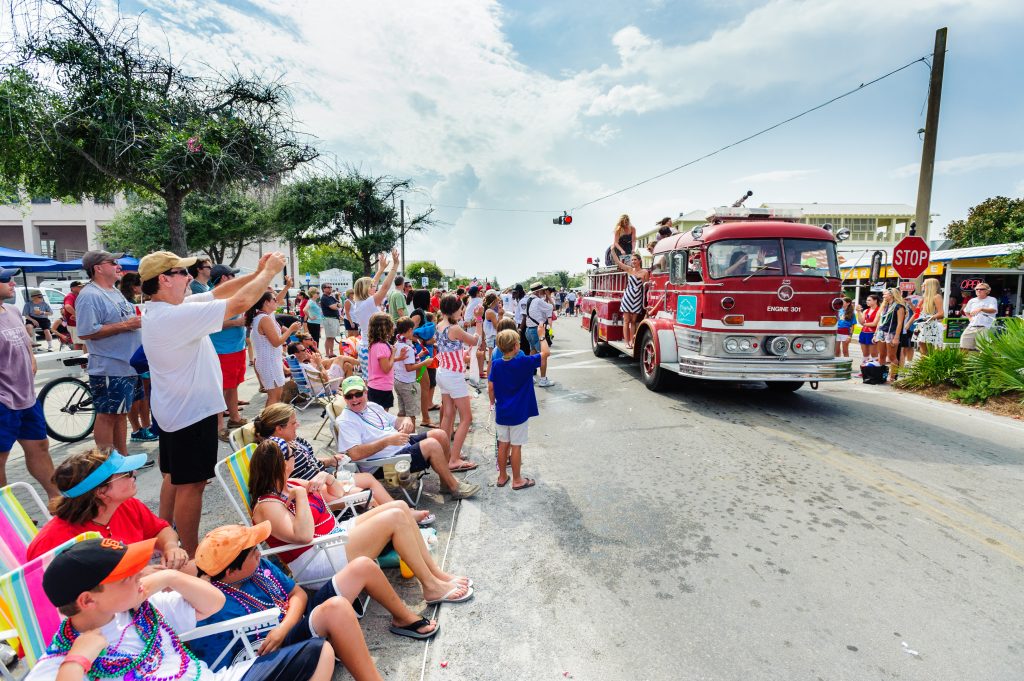
The Seaside Independence Day Celebration — Seaside’s most anticipated annual event — draws thousands eager to celebrate the holiday as only Seaside can. The town block party is the focus during the day, with live music, food and a kids bike parade featuring red, white and blue streamer-adorned bicycles. In the evening, revelers gather with blankets on the Seaside Amphitheater lawn for the musical entertainment each year. The day’s events come to a dramatic ending in a patriotic boom of fireworks in the sky after sunset with the Seaside Fireworks Spectacular.
At Christmastime, Seaside sparkles with twinkly lights and tons of garland. The Seaside Post Office, with its gleaming holiday decorations, becomes a popular spot for a photo op. The town’s festivities combine a small-town atmosphere with the magic of the holiday season, including a visit from Santa and Mrs. Claus. At just the right time, the town counts down to the lighting of Seaside’s Christmas tree.
An Escape for Artists
Creative types sometimes need a change of scenery to nurture their artistry. The natural beauty of the gentle coastline of Northwest Florida — as well as the inspirational treasure that is Seaside — seduces artists, poets, novelists, musicians, playwrights and composers from all over. Each winter, Seaside plays host to a spectrum of artists, who can immerse themselves in their work.
Escape to Create (E2C), a temporary artist residency program, is the only such residency of its kind in the Florida Gulf region, and has welcomed artists to 30A since 1993.
Seaside provides a unique setting for this multidisciplinary residential retreat. Founded as a meaningful component of Seaside’s civic life, E2C has gained national attention for its impact on the local community and in the creative lives of the artists. And while the fortunate few who are awarded a spot in the program share their talents, they add to the thriving cultural flavor of Seaside, drawing audiences from all over North Florida.
The heart of the Escape To Create experience is the gift of time and place to artists fully engaged in creative ideas, says Marsha Dowler, president of the executive board. Housed in private cottages donated in support of their projects, artists enjoy complete immersion in their work balanced with opportunities for cross-disciplinary dialogue in an intimate group setting.
“We own no studio, nor practice room for the musicians,” Dowler says. “We just start with the intent to create this experience for artists every year. Houses are different every year, artists are different every year. And we find that for the artists who respond to this, that’s what they are really seeking, the permission to fully surrender to their art.”
The Seaside Prize
The Seaside Prize, which was first presented in 1993, is an award given to individuals or organizations that have made significant contributions to the quality and character of communities.
The Seaside Institute’s founding board members came up with the idea of this award to acknowledge those who had made great strides in moving the New Urban movement forward. Each year, the recipient of the award is recognized at a ceremony held in Seaside. Originally a small, intimate affair, the Seaside Prize has grown into a multi-day event in which the whole town gets involved with attendees renting houses in the town, businesses enlisted in food service and other cultural organizations provide entertainment.
The first Seaside Prize was presented to Seaside’s co-town planners Andrés Duany and Elizabeth Plater-Zyberk, along with Vincent Scully. Since then, the Seaside Prize has been presented to planners, architects, writers, politicians and, in one instance, an entire town (the City of Portland, 1985). The award is a solid bronze key with an image of the town of Seaside imprinted on one end and the prize name on the other. It was designed by architect and town planner Dhiru Thadani (2011 recipient) and presented for the first time at the 20th anniversary of Seaside in 2001.
Seaside Charms Hollywood
Making its film debut in 1998, “The Truman Show” helped make the town of Seaside famous. As the setting for the story about Truman Burgank, a regular nice guy who unknowingly stars in the most famous reality television show of all time, people were surprised to discover that a town — minus the dome, spying cameras and TV actors — really existed.
Paramount Pictures brought 300 crewmembers and a Hollywood budget, which helped the local economy recover from Hurricane Opal in 1995. Seaside became home to hundreds of new temporary residents from Hollywood, creating buzz and excitement in the 30A community like never before. The impact is still felt years after filming, drawing a new group of curious visitors who love seeing sights that were shown in the movie.
The film included several locals as extras, including Robert and Daryl Rose Davis, Charles and Sarah Modica, and their son, Charles Jr.
The project benefited the Seaside Neighborhood School, with location fees from “The Truman Show” movie being donated by the homeowners of Seaside to fund the construction of the first building on campus.
Whether it is for a weekend, a week, or a lifetime, Seaside must be savored long enough to let time slow down, to allow cares to float away on a balmy breeze. This can only be done through extended porch-sitting, leisurely strolling and sharing time with those you care most about in a way that current urban existence rarely allows.