A Walk Through Seaside
Discover the story behind each iconic pavilion
By Madison Spence
Seaside, Fla., is more than just sugar-white sands and pastel cottages; it’s a community rooted in thoughtful design, planning, and timeless beauty. Nowhere is that vision more evident than in the nine iconic beach pavilions that dot the town’s Gulf-front edge. Each pavilion marks a unique beach access point and serves as a sculptural landmark, offering both form and function as gateways to the Gulf.
Designed by a diverse collection of architects, the pavilions are a masterclass in New Urbanism and a reflection of Seaside’s commitment to architectural excellence. Whether you’re visiting for the first time or you’ve walked these beaches a hundred times, take a moment to look closer – there’s a story behind each one.
Coleman Pavilion
Architect: David Coleman
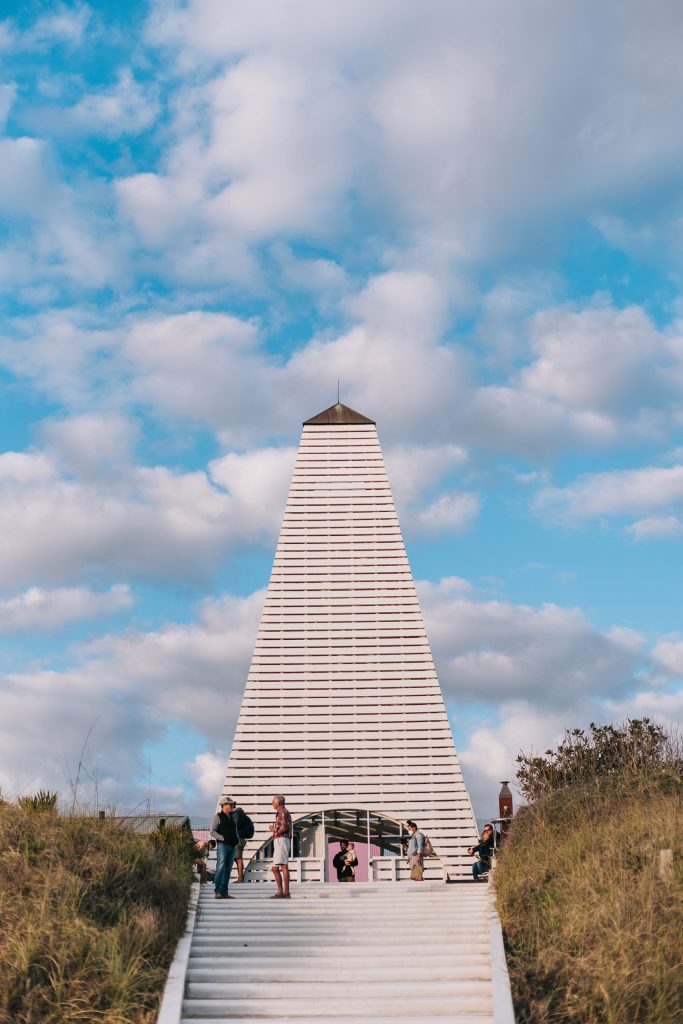
With its striking obelisk shape rising from the dunes, the Coleman Pavilion is one of Seaside’s most iconic structures, and the town’s central beach access point for locals and visitors alike. Serving as the heart of beachfront activity, this pavilion is home to Cabana Man beach services, offering chairs, umbrellas, and everything needed for a perfect day by the water and aprés beach experiences like bonfires and more with CC. BOONE. Its structure invites community gatherings, photos, proposals, and sunset watchers alike. The pavilion’s strength lies in its simplicity, clean lines, symmetry and a wide-open view.
Seaside Pavilion
Architect: Steven Holl
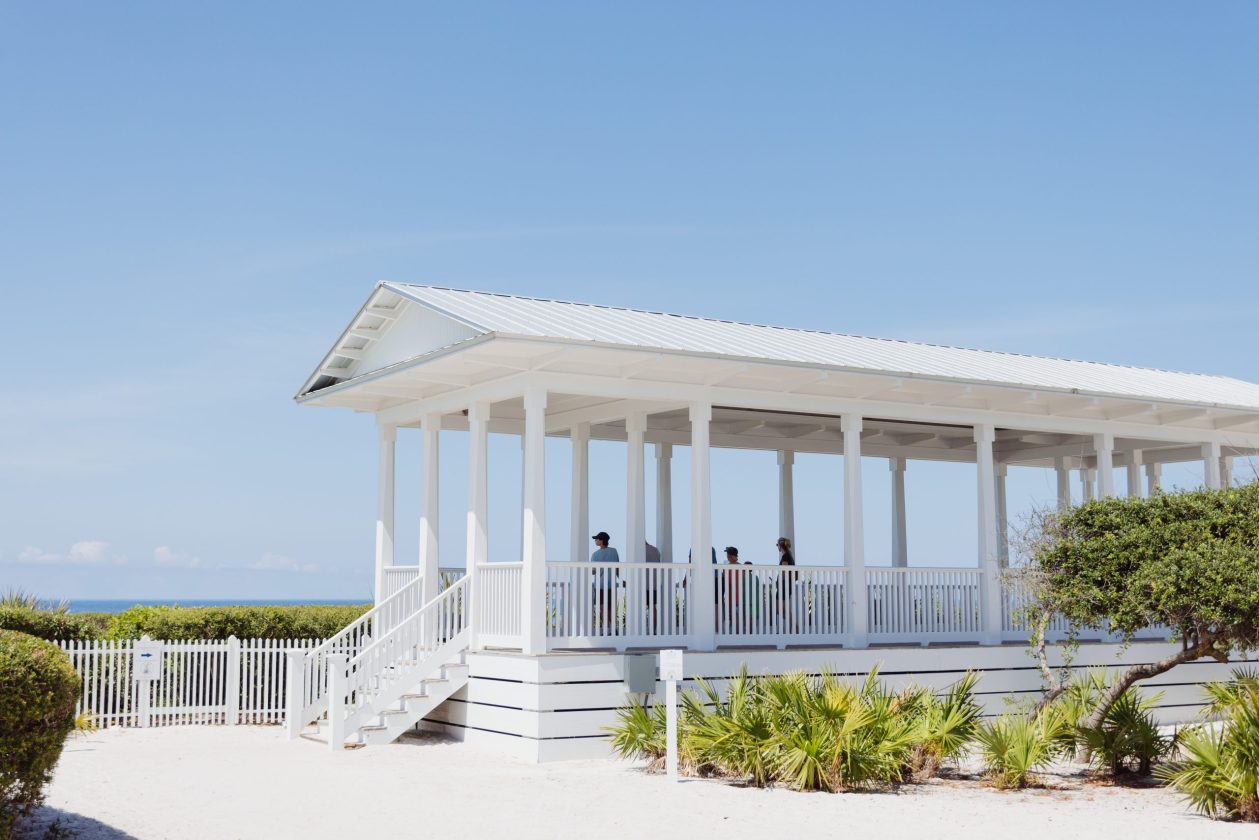
With its striking minimalist design and open-air form, the Seaside Pavilion, designed by Eric Watson, stands as one of the town’s most architecturally significant and beloved public spaces. Positioned along the Gulf-front at the end of Seaside Avenue, the pavilion creates a quiet, sculptural moment where the town meets the sea. Though it doesn’t lead directly onto the sand, it has become a central hub for community life, serving as the starting point for Seaside’s morning yoga classes and a favorite spot to unwind in the evenings. Guests often gather here with al fresco drinks and bites from Pickle’s Sandbar, settling in for the show that is a Seaside sunset. Its thoughtful design doesn’t demand attention – it simply enhances everything around it.
West Ruskin Pavilion
Architect: Michael McDonough
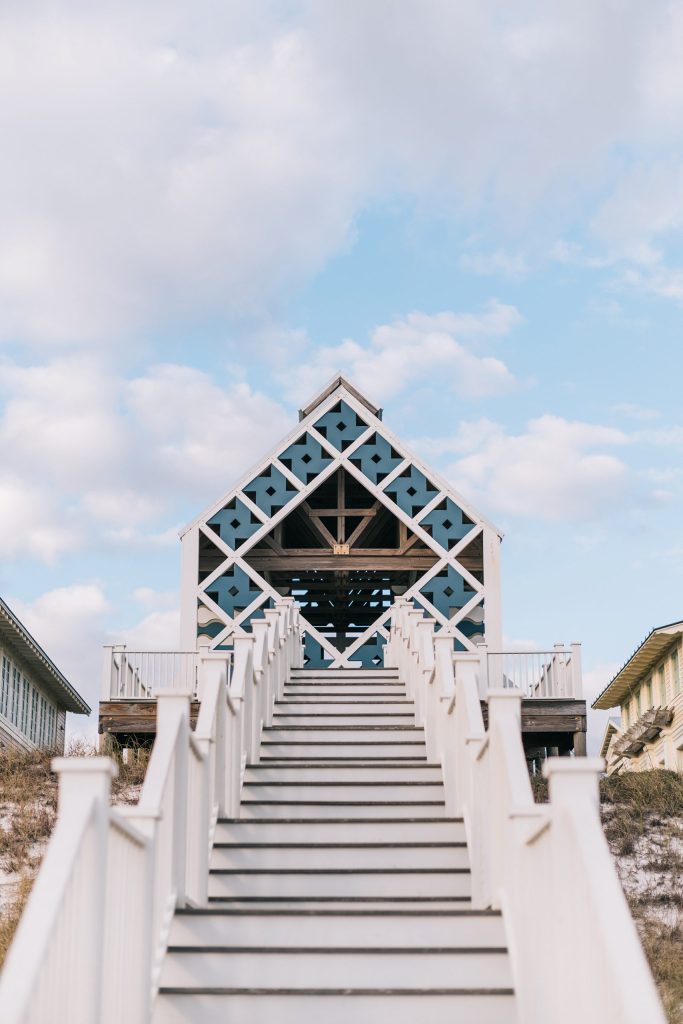
This pavilion offers an intimate, almost meditative approach to the beach for the residents and their guests of West Ruskin Street. Its classical detailing and symmetrical form create a quiet rhythm, allowing light and shadow to guide the eye toward the Gulf. It stands as a beautiful example of how architecture can elevate even the simplest passage to the sea.
East Ruskin Pavilion
Architect: Stuart Cohen
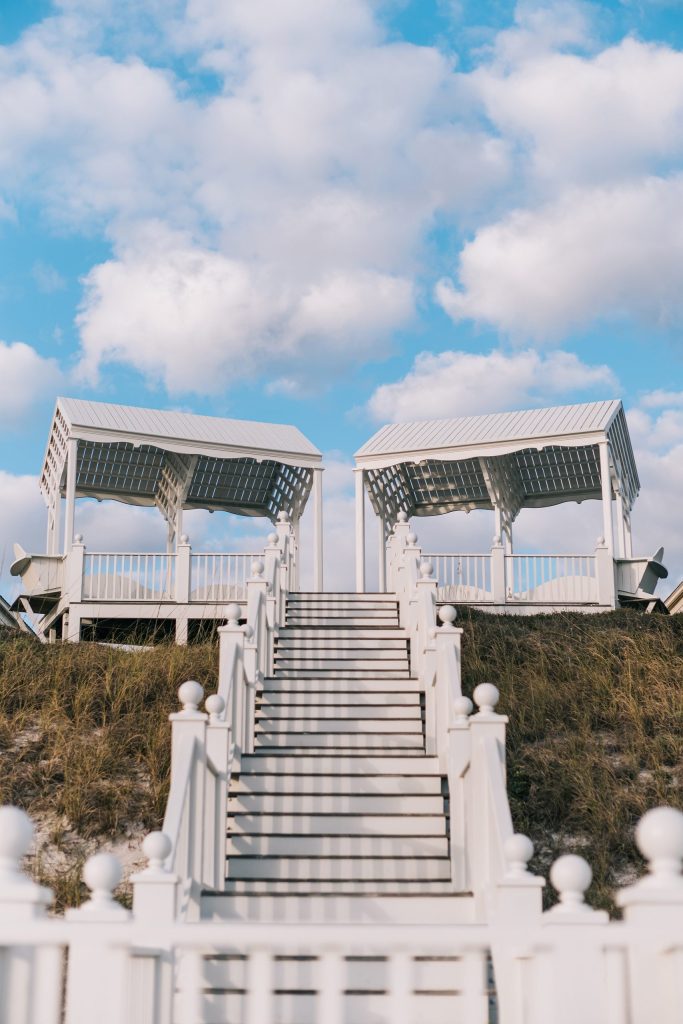
The East Ruskin Pavilion is a modern marvel, an angular, geometric structure that feels like a sculpture rising from the dunes. Its design plays with shadow and light, form and negative space. It’s a favorite among architecture buffs and sunset photographers alike.
Odessa Pavilion
Architect: Roger Ferri
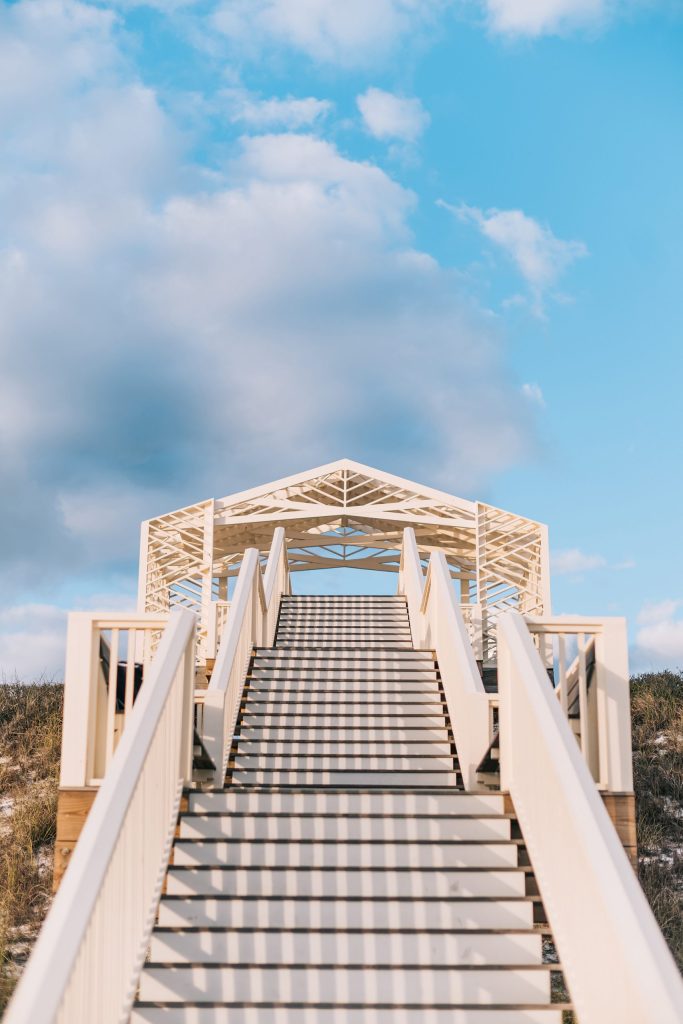
A refined study in symmetry, Odessa Pavilion takes inspiration from Greek temples with its classical columns and timeless structure. Its elegant form and rhythmic lines contribute to the cohesive beauty of Seaside’s Gulf-front design.
Tupelo Pavilion
Architect: Ernesto Buch
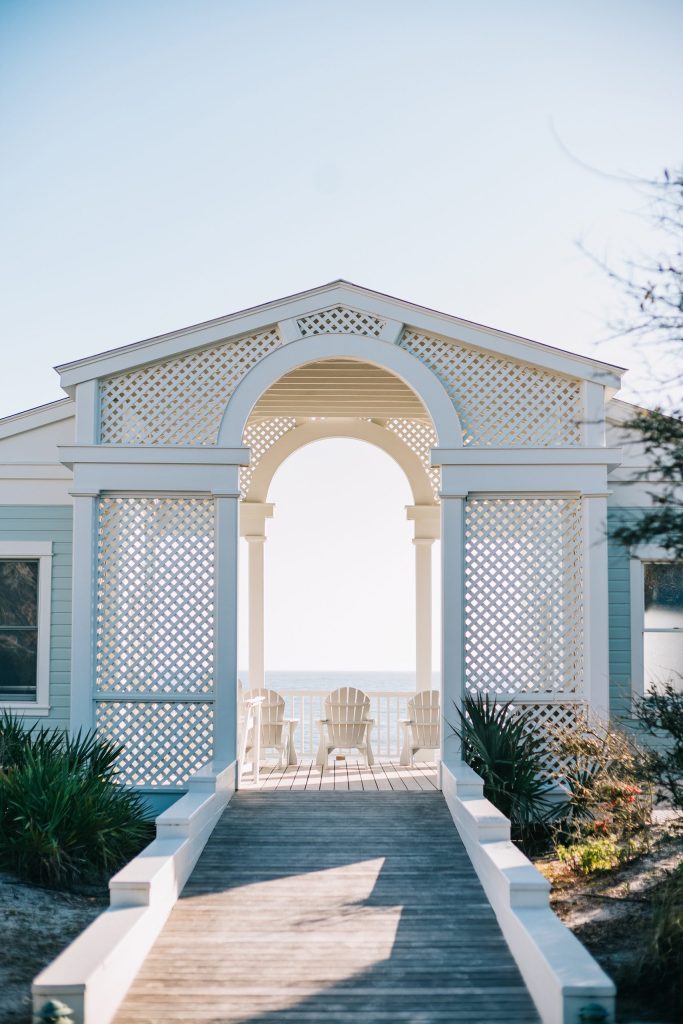
Simple, warm, and quietly integrated into its surroundings, Tupelo Pavilion reflects the understated charm of its street. Designed with natural materials and an unpretentious structure, it serves residents of Tupelo Street with a humble but thoughtful beach entry. Its breezy, wood-framed design is as timeless as it is functional.
Savannah Pavilion
Architect: Thomas Christ
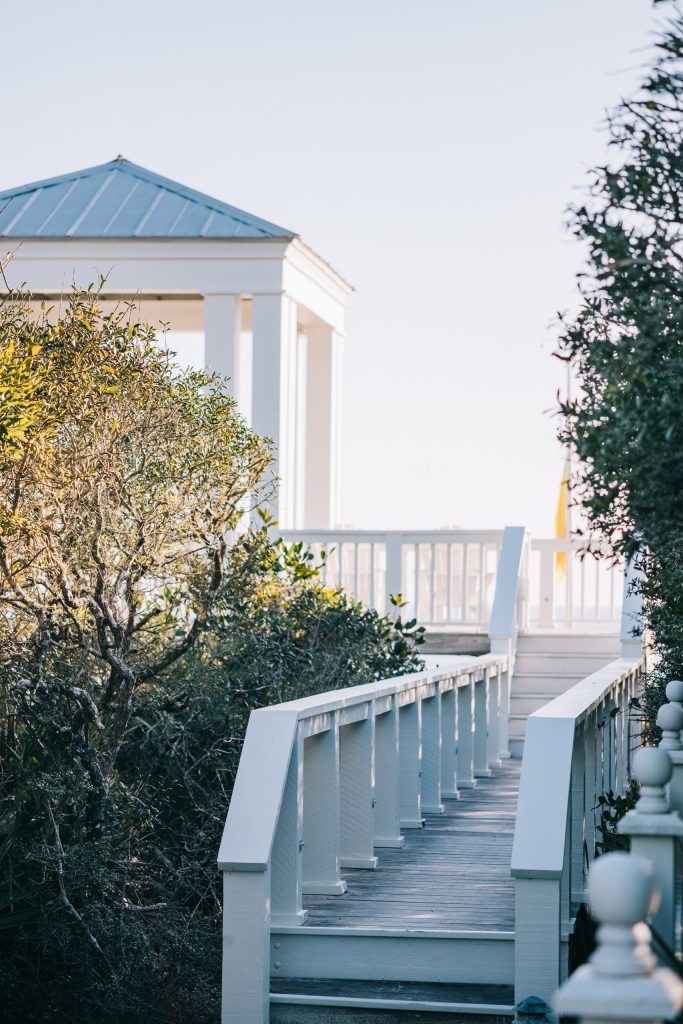
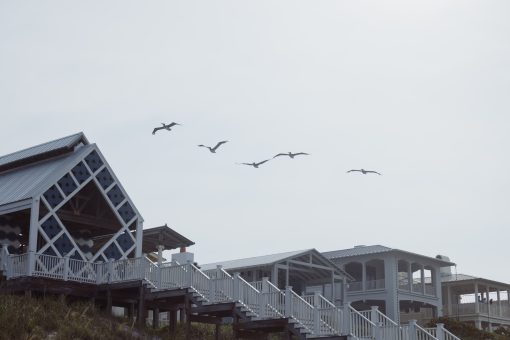
One of the more decorative pavilions, Savannah is adorned with latticework and pergola-style detailing that creates beautiful patterns of filtered light. The pavilion is a perfect marriage of romance and refinement, an architectural moment that feels dreamy and distinctly coastal.
Pensacola Pavilion
Architect: Tony Atkin
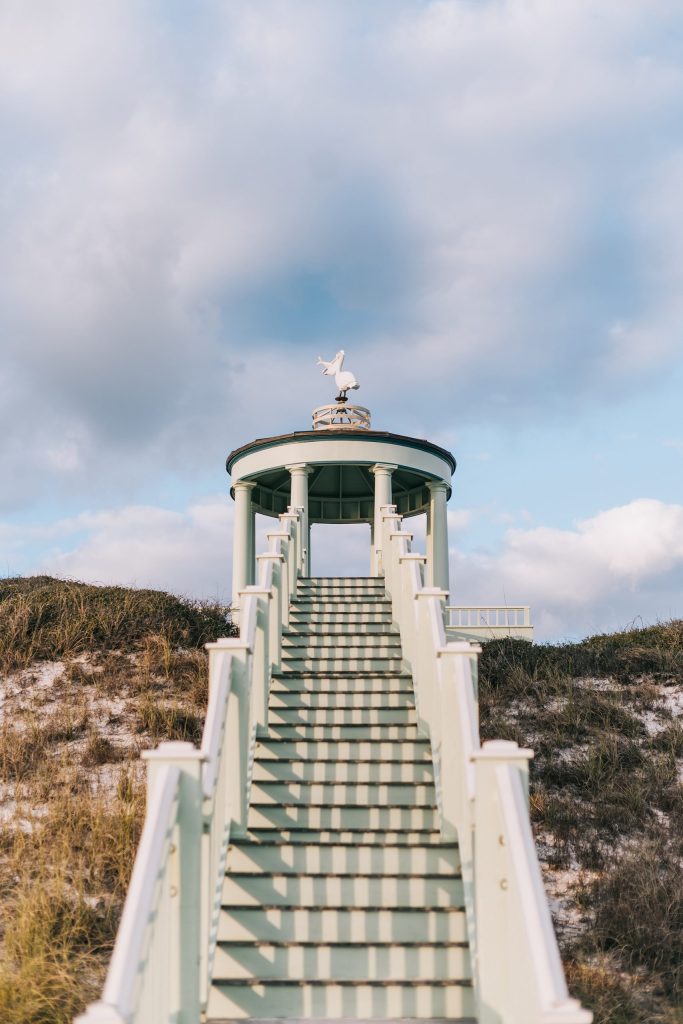
Léon Krier, one of Seaside’s original town planners, brought classical European influence to this Gulf-front gem. The Pensacola Pavilion offers residents of Pensacola Street a stately, symmetrical gateway to the beach, one that reflects the order and tradition that runs through Seaside’s master plan.
Natchez Pavilion
Architects: Jersey Devil Design/Steve Badanes & James Adamson
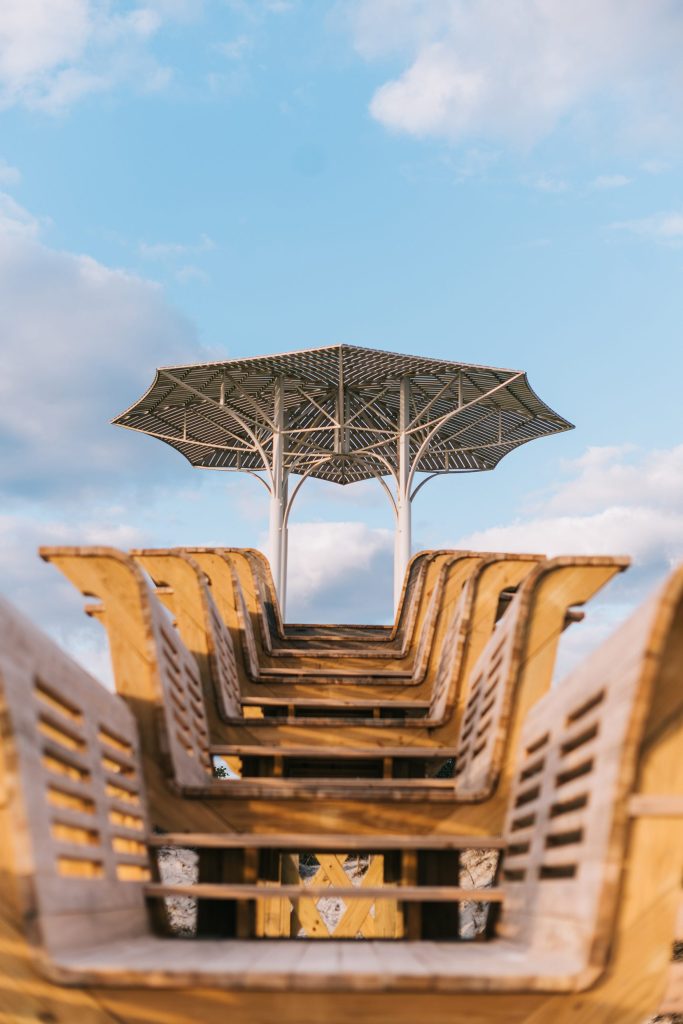
Distinctively rustic and playful, the Natchez Pavilion is made of natural materials and shaped by hand. Crafted from natural materials, it’s playful and unpolished in the best way. Designed by Jersey Devil Architects Steve Badanes and James Adamson, it features wave-shaped platforms and captures the rhythm of the ocean in every curve. Reserved for residents of Natchez Street, this pavilion proves that not all beauty is buttoned-up – sometimes, it’s perfectly windswept.
Individually, each pavilion is a work of art. Seaside’s pavilions are more than beach access points – they are architectural expressions, each one offering a unique perspective on design. Each pavilion holds a place in the story of Seaside’s urban plan: intentional, beautiful, and deeply connected to the rhythm of life by the sea.