

45 Facts About SEASIDE® – Test Your Knowledge
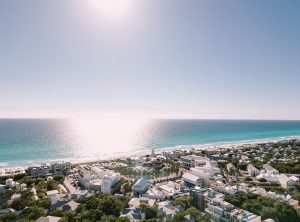
Seaside, Florida, looks like a postcard, but there’s a lot more history packed into its picturesque streets than most visitors realize. This collection of 45 facts about Seaside, Florida, traces the town from its start as a family beach retreat in the 1940s through its role as the birthplace of the New Urbanism movement, the design decisions built into every porch and picket fence, and the Hollywood moment that put it on the map for people who’d never heard of 30A.
Whether you’re a first-time visitor or you’ve been coming for decades, see how many of these you already know, and how many surprise you.
0–10: First-time visitor
11–25: Seaside regular
26–40: Local expert
41–45: Part of the story
Seaside, Florida History & Founding
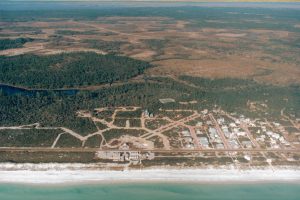
- In 1946, J.S. Smolian acquired 80 acres of land in the Florida Panhandle for $8,000 with the goal of establishing a dedicated summer retreat fostering health and wellness for the employees of his Birmingham-based department store, Pizitz. (Truly a concept ahead of its time for the 1940s.) In 1978, Smolian’s grandson, Robert Davis, inherited the property, and he and his wife, Daryl, relocated to Grayton Beach as they considered future plans.
- In 1981, SEASIDE® was founded by Robert and Daryl Davis, who envisioned a beach town inspired by the walkable communities and simple front-porch culture of Old Florida. What began as an 80-acre family property evolved into one of the most influential town planning projects in the world.
- Inspired by the research and teachings of Vincent Scully, the Davises collaborated with Andres Duany and Elizabeth Plater-Zyberk, two up-and-coming architects. Together, they designed the master plan, treating SEASIDE® as a living, breathing experiment in building a town. Their work would go on to influence communities worldwide.
- SEASIDE® is widely recognized as the birthplace of the New Urbanism movement, which emphasizes walkability, community connection, and thoughtful design. The Congress for the New Urbanism describes the site that became SEASIDE® as “the first new town built in the United States in a generation.”
- SEASIDE® challenged conventional suburban development by prioritizing people, public spaces, and neighborhood interaction over automobiles (which was against the cultural trend of the time).
- The original SEASIDE® master plan was so influential it became a foundational reference in architecture and urban planning education worldwide. Urban planners, architects, and developers, both domestic and international, continue to visit SEASIDE® to study the principles that shaped the town.
- Seaside’s founding vision was rooted in creating a place where daily life could flourish as a direct result of its intentional design and way of life.
- More than four decades later, SEASIDE® remains one of the most studied and celebrated examples of community planning in America.
Seaside, Florida Design & Architecture
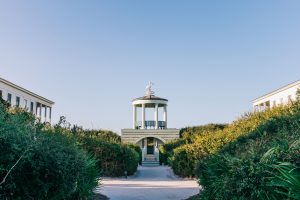
- Every building in SEASIDE® follows The Seaside Design Code that helps preserve the town’s character while allowing individual architectural expression.
- Front porches are a defining feature of SEASIDE®, designed to encourage conversation, connection, and a stronger sense of community.
- The town’s narrow streets naturally slow traffic and create a more comfortable environment for pedestrians and cyclists.
- Unlike many communities built during the same era, SEASIDE® placed a priority on undergrounding the utilities for both practical and aesthetic reasons, including storm hardening and aesthetics, reducing visual clutter, and pole placement.
- Even the lighting design is thoughtfully restrained, with the code reading, “In Seaside, everyone should be able to enjoy the night sky.” Lower light levels help preserve the natural atmosphere to keep attention on the architecture and public spaces instead of harsh commercial glare.
- Many streets were intentionally aligned to create framed views of the Gulf, revealing glimpses of the water throughout town.
- Seaside’s iconic beach pavilions were each designed by different architects, making every access point a unique architectural landmark.
- Public spaces were designed as carefully as private homes, reflecting the belief that great communities are built around shared experiences. The scale of Central Square intentionally makes events feel communal instead of overwhelming so that even larger festivals still feel tied to the town rather than disconnected from it.
- Seaside converted one of its most valuable parcels, prime property with Gulf views, into Krier Plaza, a public pedestrian space with no retail, no leasing, no revenue-generating use. It exists purely for open, walkable public gathering.
- Building heights and scale were intentionally limited to maintain a human-centered environment and preserve sightlines. Some homes intentionally use asymmetry and irregular spacing because perfect uniformity can feel artificial.
- While the homes in SEASIDE® are known for their signature white picket fences, each fence in the residential area is not allowed to repeat the same design on the same street. All are painted white, but each house has a unique picket design.
Seaside, Florida Community & Lifestyle
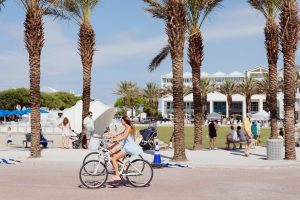
- Most destinations within SEASIDE® can be reached in just a few minutes on foot, making walking the preferred mode of transportation. Plus, the town’s design encourages walking by creating a series of memorable destinations, gathering spaces, and visual discoveries. In theory, every turn brings about a visual delight, a detail to notice, or an experience to uncover.
- Community events have been part of Seaside’s identity since its earliest days, bringing together residents and visitors alike. The Amphitheater serves as the community’s front lawn, hosting concerts, movies, celebrations, and gatherings throughout the year.
Explore the calendar of events and plan your next visit.
- A clever design by Robert Davis and Town Architect Ty Nunn, the Amphitheater lawn doubles as an essential detention pond (also known as a dry pond) for temporary stormwater holding and drainage. This keeps other areas from holding excess water, provides a natural drain system, and gives the lawn multiple important functions.
- Bicycles remain one of the most popular ways to experience town, reflecting Seaside’s commitment to a slower pace of life and emphasis on sustainability.
- The town was intentionally designed to encourage chance encounters and spontaneous conversations among neighbors. Homes are intentionally set close to the street to encourage interaction.
View the latest SEASIDE® Community Realty real estate opportunities.
- Public spaces throughout SEASIDE® are meant to function as extensions of the home, creating opportunities for connection and recreation. It’s often referred to as a ‘third space,’ a term coined by sociologist Ray Oldenburg, for places people inhabit beyond home and work.
- Seaside’s walkable layout allows visitors to park once and spend the day exploring without ever needing a car. For those not staying in town, a complimentary shuttle drops off on a continuous daily schedule.
- The town’s emphasis on hospitality and gathering has helped shape its reputation as a destination for celebrations and special occasions.
Inquire about booking a wedding, group retreat, or private event.
Seaside, Florida Nature & Environment
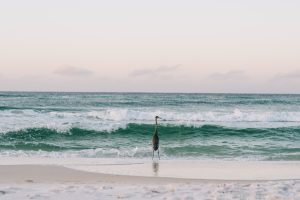
- SEASIDE® is located along Scenic Highway 30A, one of Florida’s most beloved coastal corridors. What began as a simple roadway became an iconic destination following the popularity of SEASIDE® and the subsequent New Urbanist communities that it inspired.
- The town overlooks the emerald waters and white-sand beaches of Florida’s Gulf Coast. The sand is primarily pure white quartz from the Appalachian Mountains, which made its way to the Gulf via rivers (primarily the Apalachicola) over thousands of years. Quite a journey!
- Native landscaping was incorporated throughout the community to complement the surrounding environment and limit the need for outside resources to maintain the aesthetic. Even residential lawns requiring irrigation are not part of The Seaside Code as part of the New Urbanist focus on sustainability.
- Elevated beach walkovers help protect fragile dune systems while providing access to the shoreline. It is illegal in Walton County to walk on the dunes or disrupt their natural state.
- The community was planned to work with the natural landscape rather than reshape it extensively.
- Streets, buildings, and public spaces were designed to take advantage of natural light, breezes, and views, while trees and green spaces were intentionally integrated into the town plan to create shade and comfort for pedestrians. Explore hidden gems like the shaded Rose Walk on the east side or the Sundial on the westernmost part of town.
- The most noticeable of the trees in SEASIDE® are the 52 Medjool palms in Central Square. All of these were cloned from the same tree to ensure they grow uniformly as a collection.
Arts, Culture & Experiences in Seaside, Florida
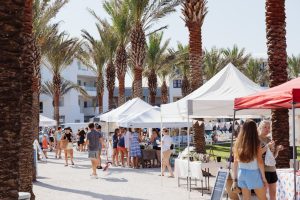
- SEASIDE® has long supported artists, performers, authors, musicians, and creative entrepreneurs. The SEASIDE® Farmers Market and The Pop-Up District have also been home to small start-ups that have grown to local success stories.
- Fitness is a key part of flourishing in SEASIDE® with biking, athletics like tennis and pickleball, walkable paths, and a state-of-the-art Fitness Center onsite. More intentional living helps maximize quality of life and overall personal wellness.
- Throughout the year, SEASIDE® hosts festivals, concerts, theatrical performances, and family-friendly events. The mult-generational appeal is a core component of the programming designed to create shared experiences across various age groups.
Read more about why Multi-Gen Families Keep Choosing Seaside.
- Culinary experiences have become an important part of the SEASIDE® story, from local restaurants to celebrated food events. Dine at one or all of Seaside’s 25 food and beverage merchants or attend the signature event SEASIDE® Seeing Red Wine Festival.
- The iconic Airstream Row helped pioneer the concept of elevated outdoor dining. In 2000, Robert Davis drove to LA, bought a 1955 Bubble Airstream, had it custom-fitted as Frost Bites, and the concept took off from there, with other concepts following suit.
- Public art, architecture, and placemaking work together throughout town to create a uniquely immersive visitor experience. Guests enjoy the visual long before they know it’s part of the definition of New Urbanism.
Film, Legacy & Fun Facts About Seaside, Florida
- The original SEASIDE® logo was hand-drawn by co-founder Daryl Davis after she completed a drafting course at a local community college. While her primary goal was to create signage for the town, the design was eventually placed on a t-shirt. This apparel became an immediate sensation and is famously credited as “the t-shirt that built the town,” as visitors flocked to purchase them as essential keepsakes.
Shop the iconic SEASIDE® t-shirt and more from The Seaside Style.
- SEASIDE® gained international recognition as the primary filming location for The Truman Show starring Jim Carrey. Many visitors still ask where the “movie set” is, not realizing the town is fully real and livable year-round. Along with several locals, Robert and Daryl Davis both appear in a cameo in the film.
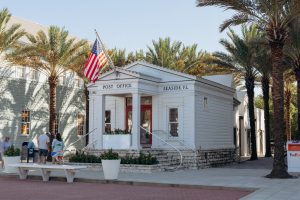
- The town’s iconic Post Office is widely considered one of the most photographed post offices in the US.
- SEASIDE® has appeared in countless magazines, books, documentaries, and travel features over the past four decades.
- Communities across the United States and around the world have borrowed planning principles first demonstrated in Seaside. What began as an ambitious experiment in town planning became a place that continues to inspire how people think about community, hospitality, and coastal living.
Add up your known facts and see where you rank as a SEASIDE® aficionado.
0–10: First-time visitor
11–25: SEASIDE® regular
26–40: Local expert
41–45: Part of the story
Forty-five facts is a lot to hold onto, but that’s sort of the point. Seaside, Florida has been building its story for over four decades, one porch, one pavilion, one architect’s decision at a time, and there’s always another layer once you think you’ve learned it all. Tally up how many you knew, see where you land on the scale above, and keep a few of these in your back pocket.


